
Street Legal Electric Dirt Bike: What to Check First
Street legality depends on the class of the bike and the rules of your state — not on how the seller labels it. Here is what to check before you ride an electric dirt bike on public roads.
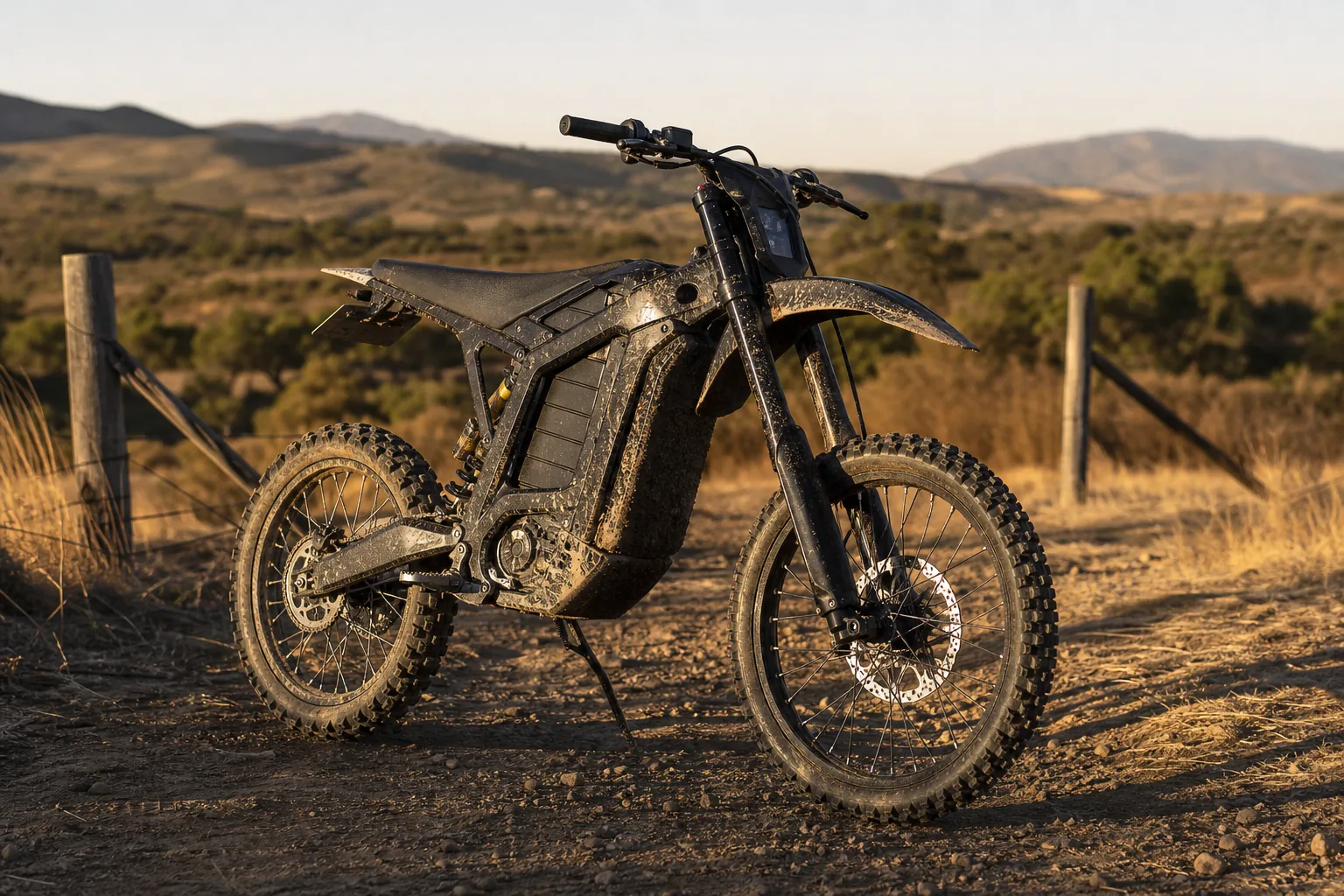
Most electric dirt bikes are sold for trail use. Whether a street legal electric dirt bike exists for you depends on how your state classifies the model — as an e-bike, a motorcycle, or an off-road vehicle — plus registration, license, insurance, and equipment rules. Confirm those before riding on public streets.
01What makes a street legal electric dirt bike?
Three things decide it: the class your state puts the bike in, the equipment it carries, and the registration and endorsement you hold. No seller can make that call for you — the rules live in state and local law. Whether a street-legal version exists for your model depends on those rules, not on a product label.
An electric dirt bike with pedals and a modest top speed may fit an e-bike class in some states. A faster, more powerful model with no pedals usually lands in motorcycle territory, which brings plates, a motorcycle endorsement, and insurance. A small trail model may not be eligible for streets at all where you live. That is why the first step is always the same: identify the class, then confirm the requirements. Ensure you match the class definition to the actual features of the model — motor power, top speed, pedals, and weight — because the same bike can fall into different classes in different states.
- Class decides the rules: e-bike, motorcycle, or off-road.
- Registration, license, and insurance follow the class.
- Local rules can differ from state rules.
02Electric dirt bike classes: e-bike, motorcycle, or off-road
Most states sort electric two-wheelers into a small set of classes. Your bike’s class sets the legal bar: what you can ride, where, and what paperwork you need.
| Class | Typical profile | Public roads | What it usually requires |
|---|---|---|---|
| E-bike (Class 1-3) | Pedals, speed capped by class | Where state law allows | Local rules; often no plates |
| Motorcycle | Higher power, no pedals | Yes, when registered | License, registration, coverage, equipment |
| Off-road vehicle | Built for trails and terrain | Usually not | Trail use only, unless local rules say otherwise |
Note the phrase “usually.” Some states classify powerful e-bikes as motorcycles; some allow certain trail models on low-speed streets; a few have a separate class for electric two-wheelers. Regulations vary more than most buyers expect, and some states publish a comparison chart on their DMV site. Depending on where you live, the same electric dirt bike may need plates, an inspection, or nothing at all beyond local rules. The only reliable move is to read your state’s definition and match it to the bike’s features — motor power, top speed, pedals, and weight. The e-bike classes themselves exist precisely because speed matters: each class has its own top-speed cap, and exceeding it can push a bike into a different category. Street-legal e-bikes are common in states that allow them; street-legal dirt bikes usually sit in the motorcycle class.
03What to check before riding on public streets
Run this checklist in order, and keep the paperwork with the bike. Each item depends on the class you identified above.
Riders who skip this checklist are the ones who get stopped, fined, or have a bike impounded. A quick review of your state DMV’s motorcycle or e-bike page covers most of it, including fees and forms. The good news: every item is checkable in an afternoon — state DMV website, coverage quote, and a local rule search. Build the street-legal checklist once, keep it with the bike, and it stops being a mystery.
04How these bikes are sold: trail first
OffGridVault carries electric trail vehicles, and the collection is honest about it: models like the MotoTec Gazella (24V 500W) and the MotoTec Pro (36V 1000W and 48V 1800W) are sold for trails, property, and trail riding. They are not advertised as street-ready, and you should not assume any of them is.

If your plan includes public streets, budget for a street-legal build: verify the class, add required equipment, handle registration and license, and confirm insurance. Costs vary too — registration fees, a coverage quote, and equipment prices depend on your state and your class, so the street side can add meaningfully to the purchase price. A rider who only needs trails can keep the bike exactly as sold — designed for trail and property use.
05Power, speed, and range: what the numbers mean
Motor, battery, speed, and range are the numbers every spec sheet leads with — and they map directly to legality and usefulness.
| Spec | What it drives | Why it matters for legality |
|---|---|---|
| Motor (watts) | Torque and climbing ability | Class definitions often use power |
| Battery (voltage) | Range and weight | Part of the model’s class profile |
| Speed (mph) | How fast it travels | Speed caps separate e-bike classes |
| Range | How far per charge | No legal role, but it sets real use |
Read the performance numbers together, not separately. A 1000W motor with a small battery gives you torque but not distance; a fast model with weak brakes is a safety problem before it is a legal one. Range is the honest one: it depends on terrain, rider weight, and throttle use, so take the number as a starting point. Tires deserve their own mention — knobby trail tires grip well on trails but handle differently on pavement, and some states look at tire type when they classify a vehicle. Compare models on the same use — trail riding, property work, or a short street commute — and let the class, not the top speed, set your expectations.
06Frequently asked questions
Are electric dirt bikes street legal?
It depends on the class your state assigns and the rules that follow it. Many electric dirt bikes are sold for trail use, so verify registration, license, insurance, and equipment requirements before riding on public streets in your state.
How do I make my electric dirt bike street legal?
Start with the class — it’s the fastest way to narrow the rules: match your bike’s motor power, top speed, and pedals to your state’s definitions. Then add required equipment such as a headlight, tail light, horn, mirrors, and a plate mount — turn signals and brake lighting are required in several states — and handle registration, license, and insurance. Local rules come last; some cities add their own limits, so a street-legal build in one county can be a different project in the next.
Do you need a license for an electric dirt bike?
It depends on the class. Powerful models without pedals are often classified as motorcycles, and many states require the right endorsement for that class. Review your state’s class rules for the specific model you own or plan to buy — if you’re not sure which class fits, ask the DMV. The same street-legal question applies to electric motorcycles and scooters.
- Wikipedia — Electric bicycle laws (accessed August 2026).
- Wikipedia — Electric motorcycles and scooters (accessed August 2026).
- OffGridVault playbook — published positioning and product data (2026).


