
Solar Panels vs. Alternatives: Which Power Source Fits Your Site?
Remote-power setup planning
Solar panels are often the practical starting point for on-site electricity. But wind, moving flow, utility supply, fuel-powered generation, and stored energy all play different roles. The right comparison begins with your site and the loads you need to run.
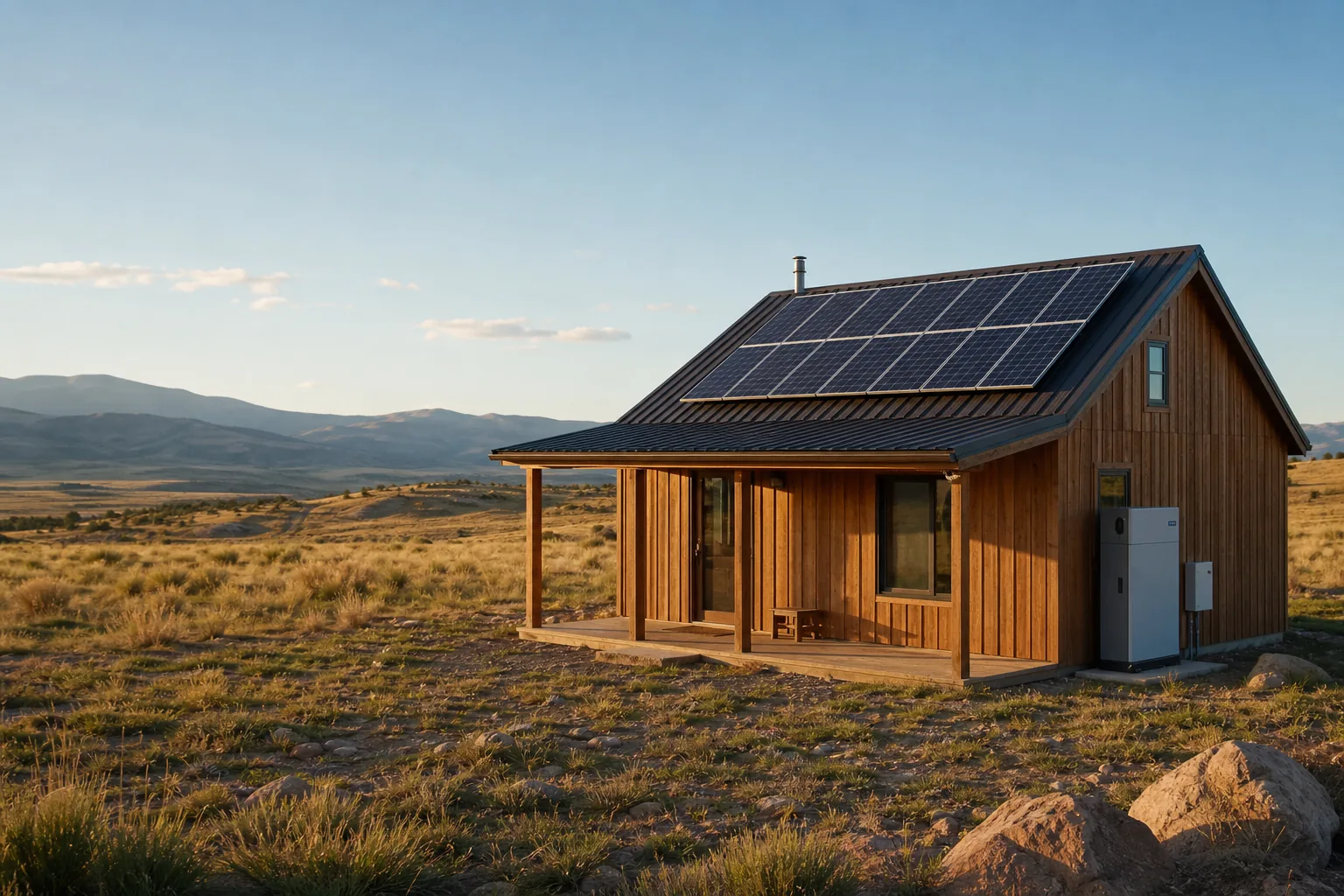
That distinction matters because “alternative” can mean several things. A battery is not an energy input; it stores electricity. A generator creates electricity from fuel. Grid power arrives through an established utility connection. Wind and micro-hydro can generate renewable energy, but only when the local resource and installation conditions support them. Solar energy is usually evaluated as one part of a setup—not as a standalone answer to every power question.
What do solar panels need to deliver usable power?
Solar panels convert sunlight into electricity. What happens next depends on the setup. A utility-connected design, a hybrid design, and an independent-power design may all use panels, but they handle production, storage, and power delivery differently. Comparing a panel with a battery or generator misses that division of labor.
List what must run and when.2. Generation
Solar panels use direct sun.3. Conversion
An inverter or controller manages usable power.4. Storage or supply
Batteries or utility supply cover the needed timing.
For a cabin, RV, remote workshop, or homestead, the useful first step is a load list: appliances, tools, lighting, pumps, heating or cooling equipment, and the hours they operate. That list guides setup sizing. It also reveals whether the problem is daily energy production, short-term backup, high starting loads, seasonal use, or a lack of utility access.
Solar panels have no moving parts in normal operation, but an installed solar setup still involves mounting, wiring, protective equipment, controls, and a design appropriate to the property. Shading, roof orientation, available space, local requirements, and future loads can all affect the result. A lower purchase price on panels does not by itself describe the cost or suitability of the whole setup.
When are wind and micro-hydro realistic alternatives?
Wind energy depends on local wind conditions and a location that can support the equipment. A site that feels breezy at ground level is not automatically a good wind site. Terrain, obstacles, tower placement, service access, and local rules all belong in the evaluation. For some properties, wind can complement solar because the two resources may occur at different times. That is a site question, not a slogan.
Micro-hydro uses flowing water. Where a property has an appropriate flow resource and installation path, it can be worth investigating with qualified local input. Where there is no suitable flow or access, it is not a viable option. The important comparison is not “solar versus hydro” in the abstract; it is whether the property has a resource that can be used reliably and legally.
| Option | Primary resource | What to verify first | Common role |
|---|---|---|---|
| Solar panels | Sunlight | Exposure, shading, mounting area, load profile | On-site generation |
| Wind | Consistent local wind | Measured or well-understood site conditions, siting, access | Generation where the resource fits |
| Micro-hydro | Suitable flowing water | Water resource, route, permissions, equipment access | Generation at qualifying sites |
| Community solar | Shared solar project | Program availability and enrollment terms | Utility-bill participation, not on-site backup |
The takeaway: resource quality comes before equipment choice. If a property has clear solar exposure, panels are a practical baseline. If it has another dependable resource, that resource deserves its own assessment instead of a generic comparison chart.
How do batteries, generators, and grid power compare?
These options solve different gaps in an electricity setup. Batteries store electricity for later use. A fuel-powered generator produces electricity when it runs. The utility supply provides electricity through a utility connection. Each may be paired with solar panels; none should be described as simply the same thing as solar power.
| If the need is… | System function to examine | Question to ask |
|---|---|---|
| Use solar electricity after sunset | Storage | What loads and operating time must the battery cover? |
| Keep selected loads operating during an outage | Backup design | Which loads are critical, and how long must they run? |
| Supply power where no utility connection exists | Generation plus storage and controls | What resource is available through the year? |
| Reduce dependence on an existing utility connection | Hybrid or grid-connected design | What local interconnection rules and consumption pattern apply? |
A generator may be part of a resilience plan, especially where occasional backup is the priority. It has fuel, noise, maintenance, and operating considerations that are different from solar equipment. Batteries can make stored stored electricity for later use, but they need a charging input—such as solar, utility supply, or a generator. A utility connection can be the simplest supply path when it is present and reliable, though it does not automatically provide outage power without an appropriate backup setup.
How should you compare cost, installation, maintenance, and reliability?
For solar panels, mounting and electrical work can range from a relatively compact setup to a larger property-wide design. For wind and micro-hydro, physical siting and resource access can be central constraints. For batteries, the choice is tied to the loads, desired operating time, charging inputs, and controls. For any setup, maintenance should be discussed in concrete terms with the equipment supplier and installer rather than assumed from a broad category label.
- What must stay powered? Separate critical loads from convenience loads.
- When is power needed? Daytime use, overnight use, seasonal use, and outages lead to different designs.
- Which resource is actually present? Sunlight, wind, water, utility access, fuel access, or a combination.
- What must the property support? Mounting, wiring, equipment space, permits, service access, and maintenance.
This is also where broad comparisons become misleading. A setup that is efficient for one home may not suit a remote cabin, RV, agricultural load, or workshop. Avoid treating a single component specification as proof that the overall setup will work for a specific property.
Which path fits a home, cabin, RV, or remote load?
For a home with utility access, the comparison often centers on how on-site solar, storage, and utility power work together. For a cabin or remote building, the priority may be an independent-power setup that matches real daily loads and seasonal conditions. For an RV or mobile setup, usable mounting area, travel patterns, and portable power needs shape the design. For a pump, gate, workshop, or other remote load, it is often more useful to design around that load than to begin with an oversized general-purpose setup.
| Starting situation | Practical next step |
|---|---|
| Utility-connected home | Document consumption and outage priorities; compare utility-connected and hybrid setup designs. |
| Cabin or homestead without utility service | Build a load list and assess solar exposure before choosing generation and storage. |
| RV or mobile application | Map available surface area, typical travel conditions, and the appliances used away from hookups. |
| Remote single load | Define the load’s power and schedule, then evaluate a purpose-built setup. |
Off Grid Vault carries solar panels, complete solar kits, battery banks, hybrid inverters, backup power equipment, charge controllers, and balance-of-system components. If solar exposure and your load profile point toward an on-site solar solution, start by reviewing the solar panels collection alongside the components required for the setup role you need. For a high-ticket setup, a site-specific design conversation is more useful than choosing from a generic product-category list.
FAQ
Are solar panels better than wind power?
Neither is automatically better. Solar panels depend on sun exposure; wind setups depend on suitable wind conditions and siting constraints. Compare the resource at the specific property and the loads the setup must support.
Can batteries replace solar panels?
No. Batteries store electricity; they do not create it. A battery setup needs a charging input, which may be solar, grid power, a generator, or another suitable source.
Can a generator replace an independent solar setup?
A generator can produce electricity during operation, but it has a different operating model and fuel requirement. It can be part of a backup or independent-power plan; the right role depends on the loads, desired runtime, and site conditions.
What is the first step before buying solar equipment?
List the loads you need to serve, when they run, and the property conditions: solar exposure, space, access, and whether utility power is available. Those inputs determine the setup design.
What environmental and technology claims should be treated carefully?
Solar technology uses sunlight to generate electricity at the property. That does not make every environmental claim interchangeable. The materials used to manufacture equipment, transport routes, deployment work, local weather, and the way electricity is used can all affect the scope of a comparison. The same caution applies when solar is compared with wind, flow power, generators using fuels, or a utility supply that may use different generation inputs over the years.
For example, a reader may want to reduce reliance on fossil fuels, lower a home’s exposure to fuel deliveries, or add a clean-energy component to a residential plan. Those are legitimate planning goals. However, they are not proof that one specific product will deliver a significant result for every home. Output depends on the sun, shading, panel orientation, equipment efficiency, load timing, storage, and the conditions at the location. Heat can also affect operating conditions, while local wind and flow resources change the alternatives worth evaluating.
A useful comparison therefore asks two separate questions. First, what can each technology produce at this site? Second, what does the owner require from the setup: lower fuel use, outage support, a way to power remote loads, or a path toward a more sustainable electricity supply? Keeping those questions separate prevents a marketing label from replacing a design assessment. It also makes it easier to compare costs, maintenance, deployment requirements, and service access without assuming that a single input fits every property.
For homeowners, the key is to document the intended use and request product documentation that matches it. For cabins, farms, and remote homes, note whether the setup is seasonal or year-round, whether a utility connection exists, and whether an installer can access the property. This does not require an optimistic forecast. It requires a complete load list, a realistic resource assessment, and current documentation for the equipment being considered.
Different systems can use the same solar technology, yet their efficiency, costs, and low-light performance depend on the site. A panel is generating power only when sunlight reaches it without suitable equipment, and a technician may need to install that equipment. Where a comparison includes gas, greenhouse emissions, or a claim that output is significantly lower, the supporting source should be named and current.
Sources and a sensible next step
For further comparison reading, see the SERP sources collected for this brief: Alternative Energy Sources, 8MSolar, The Impact Investor, Forbes Home, Grand Designs Magazine, Solar Power CEE, Solar Panel Questions, and Cenvar Solar. Their URLs were supplied in the editorial datapack. Before acting on any setup recommendation, verify current product documentation, local requirements, and property-specific conditions.
Start with the loads and the resource. That turns “solar panels vs. alternatives” from a vague product search into a setup decision you can verify.


