
Solar Panels Buying Guide: How to Choose the Right System
Off-grid planning
A solar panel is not a complete power plan. Before reviewing panel listings, define the loads you need to run, the site you can use, and the equipment that will convert sunlight into usable electricity.
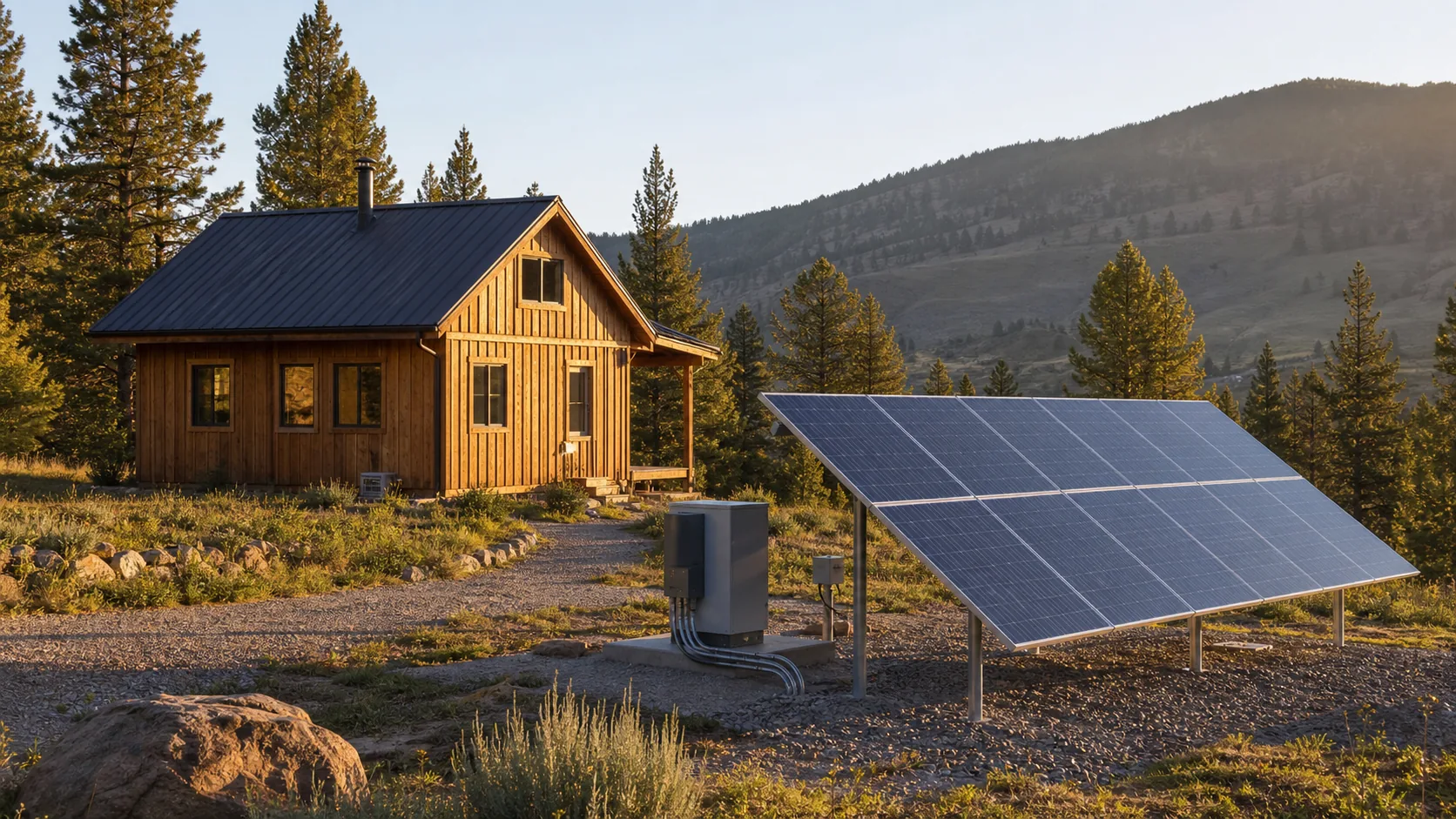
Direct answer
Use this solar panels buying guide to choose a system sequence, not a standalone panel. Start with the electricity loads and the time you need them available. Then check the roof or ground site, compare panel documentation and mounting compatibility, and match the array to the inverter, charge control, battery, wiring, and protection your use case requires.
Start with the loads you need to run
The right first question is not “Which panel should I buy?” It is “What must this system power, and when?” That distinction keeps a panel comparison from becoming a list of unrelated specifications. A remote cabin, an RV, a homestead workshop, and a backup-power plan can all use solar energy, but they do not start with the same load profile.
Make a written inventory before looking at a panel. List the devices or circuits that matter, the electricity they use, how long they need to run, and whether they operate at the same time. Add the location: a roof-mounted array, a ground mount, a portable setup, or a mixed approach all impose different practical limits. The inventory is not a substitute for an electrical design; it is the detail that makes a useful conversation with an installer or system designer possible.
Decision module · load inventory
This module encodes the buying order: loads and use case come before a panel listing.
For an off-grid system, the panel is one source of energy. Energy storage, inverters, charge controllers, wiring, disconnects, and overcurrent protection have distinct roles in the system. Treating them as one purchase without checking compatibility can create a plan that looks complete on paper but does not match the intended loads.
Check the site before comparing panels
A panel can be technically suitable and still be a poor fit for the place where it will be installed. Start by documenting the usable area, shade patterns, mounting location, equipment access, and local process. The U.S. Department of Energy’s Homeowner’s Guide to Solar is a useful starting point for homeowners evaluating solar options; local requirements and site conditions still need to be checked for the actual property.
Roof projects need more than a view of the roof from the street. Note usable surfaces, obstructions, areas that receive changing shade, and the route between the array and the rest of the equipment. A ground-mounted array changes the questions: available land, trenching, access, and how the structure will be located and maintained. Do not infer a site’s production or installation cost from a photo or a generic calculator.
| Site question | What to document | Why it changes the decision |
|---|---|---|
| Mounting location | Roof, ground, portable, or a combination | It determines physical fit and mounting approach. |
| Sunlight and shade | Visible obstructions and changing conditions | It affects which locations deserve further assessment. |
| Equipment route | Distance and access between array and system equipment | It shapes the installation plan and wiring path. |
| Local process | Property-specific permitting, utility, and code questions | It cannot be assumed from another location. |
Site-readiness table: each row names an attribute that must be checked before choosing an array configuration.
Compare panel attributes in the right order
Review documentation and physical compatibility before treating a headline output figure as the whole decision. Panel listings can make a buying decision feel simple because they put a few specifications at the top. Those fields matter, but they only make sense alongside the datasheet, dimensions, mounting compatibility, operating conditions, and the rest of the solar system.
Ask for the documents that identify the exact panel being considered. Keep them with the quotation. This is where homeowners can separate an actual component decision from a vague description. It also helps an installer or system designer verify whether a proposed panel can work with the selected rack, inverter, controller, and electrical plan.
| Document or attribute | What to look for | Decision it supports |
|---|---|---|
| Manufacturer datasheet | Exact model identification and published specifications | Confirms you are evaluating a defined component. |
| Physical dimensions | Panel size and planned placement | Checks fit on the roof or ground structure. |
| Mounting compatibility | Approved racking and installation documentation | Connects the panel to the intended mounting method. |
| Warranty documents | Terms for the exact component | Lets you review coverage rather than rely on a summary. |
| Operating conditions | Conditions stated in manufacturer documentation | Frames questions about the intended environment. |
“Efficiency” is a useful comparison term only when it is read in context. It does not replace an assessment of available area, system design, or the electricity demand you are trying to meet. The same applies to cost: compare a documented system scope, not a panel price detached from mounting, power electronics, storage, installation, and support.
Build the rest of the system around the panel
Panels collect solar energy; the rest of the system determines how that energy is controlled, stored, and delivered to loads. This is the practical boundary that broad buying guides often blur. Off Grid Vault’s catalog includes solar panels, complete kits, energy-storage banks, hybrid inverters, backup generators, charge controllers, and balance-of-system components because a working plan involves more than one category.
System map · component relationship
System map: the arrows describe component roles, not a claim about a specific product configuration.
An off-grid cabin may need a different architecture from an RV or a rural property with backup-power goals. A battery bank may be central to one plan and not another. An inverter and charge-control approach depend on the equipment and electrical design. Keep these choices tied to the written load inventory and the exact product documents. That is more useful than choosing a panel first and attempting to force the rest of the system around it.
Practical takeaway
If you cannot yet name the loads, site, and system components, you are not ready to select a final panel. You are ready to gather those inputs and ask for a documented design.
Turn the shortlist into a documented purchase
A solid purchase decision is a file of matching documents, not a single persuasive listing. Before placing an order, review the exact components, the scope of what is included, the intended mounting and installation plan, and the support path for the system. Ask which questions still need a property electrician, installer, permitting office, or utility. Those questions have property-specific answers.
- Written load inventory
- Site notes and photos
- Exact panel datasheet
- Mounting plan
- Inverter and storage compatibility
- Included components list
- Warranty documents
- Installation and support contacts
Off Grid Vault is an authorized reseller of selected solar and power-equipment brands and offers a free system-design consultation according to its supplied playbook. Product-specific sizing, output, municipal requirements, and quoted cost remain [A VERIFIER] until they are matched to the exact panel documents and property. If you already have the inputs above, start with the solar panels collection and bring the documentation into the conversation. If you do not have those inputs, use this checklist first. It will make every later quote easier to compare.
Use a two-column review before you place an order
Make the last decision with two lists: facts confirmed by documents, and questions that still need a property-specific answer. This simple review prevents a broad guide from turning into an unsupported assumption. It also gives homeowners a consistent way to evaluate different solar options without pretending that every residential project has the same costs, production, or installation path.
The confirmed column should contain the exact product names, documents, included components, and scope offered by the seller. The open-questions column should contain the number and type of loads, the mounting location, the equipment already available, and the people responsible for installing each part. Add the questions that only an installer, utility, or permitting office can answer. This is where factors such as site access, wiring route, and the intended amount of energy storage become real planning inputs rather than search terms.
| Confirm in writing | Keep open until verified |
|---|---|
| Exact panel type, datasheet, and mounting documents | Property-specific sizing and energy production |
| Which balance-of-system components are included | Installation scope and which trade performs it |
| Warranty documents for the specified equipment | Residential permitting, utility, and tax questions [A VERIFIER] |
| Support contact and quote version | Whether projected savings, bills, or costs apply to this property [A VERIFIER] |
Review table: it separates documented component information from questions that cannot be answered by a generic article.
Solar is a renewable energy technology, but the purchase is still an investment in a particular system and site. That is why two people can have a different experience with similar-looking panels. One may be building a small cabin system; another may be planning around residential electricity bills, a roof constraint, or a larger battery bank. The useful common ground is the process: identify the loads, document the conditions, then determine which equipment and installation options fit those conditions.
Do not use an average price, a generic annual estimate, or a claim about lower costs as a substitute for the final quote. Those figures are often presented without the same equipment scope, site details, or installation assumptions. Ask companies and installers to state what they are supplying, what is excluded, and what information they need from you. For multi-year decisions, keep the panel, inverter, battery, and warranty documents together; they are more useful than a short sales summary when questions arise later.
There are several types of solar panel and system arrangements available, but no article can determine the final fit without the actual property and load information. Use this guide to make the next conversation more precise: bring the site notes, the load list, and the documents for every component under consideration.
Keep the decision useful when the inputs change
It is important to separate a useful planning framework from a completed engineering decision. Solar equipment can remain in service for years, while a property, household, or energy plan can change. An article can help you organize questions, but it cannot set the exact array size, system architecture, installation method, or expected performance for an unreviewed site. Keep the documentation available over the years in which the system may be reviewed or changed.
Consider the decision in three layers. First, preserve the source documents for the components under consideration. Second, write down the assumptions behind the intended loads and use case. Third, ask the installer or system designer which assumptions would change the selected equipment. This approach helps you review systems without treating a catalog page as a promise about future electricity bills, savings, or money.
The same discipline matters when new options appear. A different panel technology, a second storage unit, or a change in mounting type may be relevant, but only after the documented load and property conditions are reviewed again. For residential buyers, the most practical question is not which listing looks more persuasive. It is which documented configuration can be installed and supported for the use case you have described.
Keep the file simple: the load inventory, site notes, quote version, product documents, and the names of the companies or installers responsible for each scope. That record is more valuable than a generic average because it lets you return to the relevant facts when you consider a change later.
Questions buyers ask
Can solar panels alone power a home or cabin?
No single component answers that question by itself. A panel is part of a system that may also require power conversion, charge control, storage, wiring, protection, mounting, and an installation plan. Start with the loads and site, then match the complete system to documented requirements.
Should I use a roof mount or a ground mount?
The choice depends on the actual property. Document usable area, shade, structural or land conditions, access, and the route to system equipment. The Department of Energy guide can help homeowners frame initial solar questions, but a local installation and permitting review remains property-specific.
What should I bring to a system-design consultation?
Bring the load inventory, site notes, photos of possible mounting areas, and the use case: cabin, RV, homestead, backup power, or another application. Also bring any existing equipment details. Those inputs let a designer discuss compatibility instead of guessing from a single panel listing.
Sources and editorial note
U.S. Department of Energy — Homeowner’s Guide to Solar, accessed July 26, 2026.
Off Grid Vault Editorial Team: this guide is educational. It uses the supplied Off Grid Vault catalog and service context but does not replace local design, installation, electrical, permitting, utility, or manufacturer documentation.
Updated July 2026. Next step: keep the load inventory and site notes with every quote so the panel, system, and installation scope can be reviewed together.


